Where Plastic Actually Enters the Home
In a typical Singapore household, the bulk of plastic waste arrives through three channels: grocery shopping (packaging), takeaway food (containers, bags, cutlery), and personal care products (bottles, dispensers, packaging). Understanding where volume is generated makes it possible to target substitutions where they have the most impact.
The carrier bag charge applies at supermarkets, but plastic enters the home through wet markets, hawker centres, convenience stores, and online delivery — all of which currently have no charge. Behavioural change in these contexts depends on habits rather than price signals.
Grocery and Kitchen
Fresh produce at wet markets is typically sold without packaging when requested. The habit of bringing a cloth bag or reusable container is straightforward and eliminates a significant volume of plastic per weekly shop. Pre-packaged produce from supermarkets generates more plastic per kilogram of food purchased — loose produce is generally the lower-waste option where available.
Dry goods — rice, flour, lentils, cereals — are frequently available in bulk at provision shops and certain supermarkets. Buying larger quantities reduces the packaging-to-product ratio. Glass or metal containers reused from previous purchases provide effective storage.
Substitutions that hold up in a Singapore kitchen
- Reusable bags (canvas, jute, or nylon) for wet and dry market shopping
- Silicone food covers in place of cling film for storing cut produce
- Glass or stainless steel containers for meal prep storage
- A reusable water bottle — eliminates the single largest category of single-use plastic in Singapore
- Beeswax wraps for wrapping sandwiches, cheese, and cut vegetables
- Loose-leaf tea in a strainer rather than individually wrapped tea bags
Takeaway and Food Delivery
Hawker centres and food courts generate substantial packaging — polystyrene containers, plastic bags, disposable cutlery — with each meal. Under the Resource Sustainability Act, disposable carrier bags at food establishments have been subject to charges, but uptake of alternatives varies.
Bringing a reusable container to hawker stalls is accepted at most stalls, though the practice requires advance planning. For food delivery orders, most platforms allow users to opt out of disposable cutlery — an option that is easily missed and rarely selected by default.
Bathroom and Personal Care
Personal care products — shampoo, conditioner, body wash, hand soap, toothpaste — represent a consistent monthly source of plastic bottles. Alternatives that have been observed to reduce this category include:
- Shampoo and conditioner bars — solid format, no bottle, equivalent to several liquid bottles in volume
- Bar soap replacing liquid hand wash dispensers
- Refillable dispensers — available at a growing number of zero-waste and organic product shops in Singapore
- Toothpaste tablets or powder in glass jars
- A safety razor with replaceable metal blades replacing disposable plastic razors
The initial cost of these substitutions is typically higher than the equivalent single-use version. The per-use cost is lower over time. The volume of plastic exiting the bathroom drops significantly after the first three months of transition.
Cleaning Products
Household cleaning products — multipurpose spray, floor cleaner, dishwashing liquid — are among the most concentrated sources of plastic bottles in the home. Concentrated versions, available at most supermarkets, require dilution before use and deliver more cleaning product per bottle purchased. Refill stations for cleaning products are available at selected retailers in Singapore.
Dissolvable cleaning tablets — added to a reused spray bottle with water — eliminate the plastic bottle entirely for multipurpose surfaces. These are available from several Singapore-based suppliers as well as international brands stocked locally.
Packaging at Source: The Point That Gets Skipped
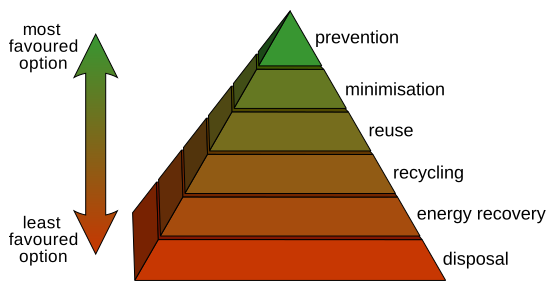
Most plastic reduction guidance focuses on substitution — replacing a plastic item with a non-plastic alternative. The more upstream intervention is refusal: declining packaging before it enters the home. This applies to:
- Polystyrene trays under supermarket meat — can often be avoided by purchasing from the wet market counter
- Secondary packaging on products already packaged (e.g., individual snack packets in a plastic outer bag)
- Promotional plastic bags and pouches included with purchases
- Plastic stickers and wrapping on fruit
None of these refusals require significant effort. They require the habit of noticing packaging choices at the point of purchase rather than at the point of disposal.

What Cannot Be Recycled
Singapore's blue bin system accepts limited plastic types — primarily PET bottles and HDPE containers. The following plastic items, commonly believed to be recyclable, are not accepted and should not be placed in the blue bin:
- Plastic bags and film (carrier bags, cling film, bread bags)
- Polystyrene foam of any kind
- Plastic cutlery and straws
- Chip and snack packets (metallised film)
- Bubble wrap
Placing these in the blue bin contamates the load. They belong in the general waste chute — the argument for reducing their entry into the home in the first place.