The Two Streams That Matter
Singapore's residential waste separates into two primary channels: general waste and recyclables. Everything else — e-waste, textiles, bulky items — has its own designated collection pathway. Most contamination problems occur when residents conflate these streams or treat the chute as the universal disposal point.
General waste is collected multiple times per week by licensed waste collectors appointed by the National Environment Agency (NEA). This stream feeds directly into one of Singapore's four Waste-to-Energy (WTE) incineration plants. The resulting incineration ash is transported to Semakau Landfill — Singapore's only offshore landfill, which serves as the final repository for all residual waste.
The Blue Bin Recycling Network
Blue recycling bins are deployed across all HDB estates, most condominiums, and many landed property developments. They operate on a commingled basis — paper, cardboard, glass, metal, and certain plastics are deposited together and sorted at Material Recovery Facilities (MRFs) downstream.
The critical rule is cleanliness: food-contaminated packaging contaminates the entire load. A greasy pizza box, an unwashed yoghurt container, or a plastic bag containing food residue degrades the value of all recyclables in the same collection. Rinse before depositing. If an item cannot be adequately cleaned, it belongs in the general waste chute.
What the blue bin accepts
- Paper and cardboard — dry, not shredded, not greasy
- Glass bottles and jars — rinsed, caps removed or recycled separately
- Metal cans and tins — rinsed
- Plastic bottles marked PET (♳) or HDPE (♴) — rinsed, caps on
- Cartons (Tetra Pak) — rinsed and flattened where possible
What does not belong in the blue bin
- Food waste of any kind
- Plastic bags and film packaging
- Styrofoam containers
- Soiled tissues, napkins, paper towels
- Ceramics, mirrors, or broken glass
- Batteries, light bulbs, or any electronics

E-Waste: A Separate System
Electronic waste — batteries, mobile phones, laptops, small appliances, cables, bulbs, and IT peripherals — must not enter either the general waste chute or the blue bin. Both pathways lead to incineration, which releases hazardous materials from electronics into the environment.
Under Singapore's Extended Producer Responsibility (EPR) framework, retailers and designated collection operators are required to provide take-back services. Drop points are available at major electronics retailers, supermarkets, community centres, and designated collection events. The NEA's e-waste portal lists current drop-off locations.
Textile Collection
Clothing in wearable condition is accepted by donation bins operated by various charitable organisations across Singapore. Non-wearable textiles — damaged, stained, or heavily worn — can be directed to commercial textile recyclers that process fabric into industrial rags and insulation material.
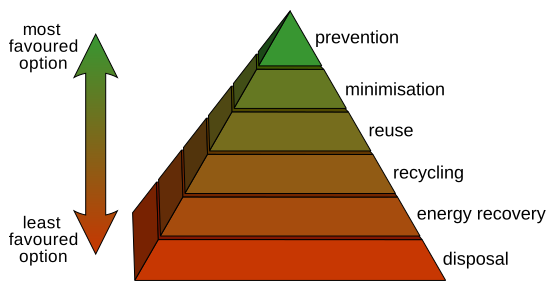
The key distinction is that no textile, regardless of condition, should enter the general waste chute if an alternative exists. Incineration is the least preferred outcome in Singapore's waste hierarchy.
Bulky Item Collection
Large furniture, mattresses, and appliances that cannot be deposited in standard bins require separate arrangements. HDB residents can contact their Town Council to schedule bulk waste collection. Condominium residents typically make arrangements through their building management.
Before scheduling collection, it is worth considering whether items can be passed on via secondhand platforms. Working appliances and furniture in reasonable condition retain value that incineration eliminates.
What Happens at the End of the Line
General waste that reaches the WTE plants is incinerated at temperatures exceeding 850°C, generating electricity fed into the national grid. The volume reduction is approximately 90% by volume and 70% by weight. The remaining ash — bottom ash and fly ash — is transported to Semakau Landfill, which receives around 2,000 tonnes of ash per day.
Semakau is projected to reach capacity in the mid-2030s. This trajectory is the central policy pressure behind Singapore's Zero Waste Masterplan and the practical reason why diversion at the household level — through recycling, reuse, and reduction — carries real consequences beyond individual habit.